
Carnival of the Bold 2025: Reimagining Malaysia’s Collective Future
Carnival of the Bold 2025: Reimagining Malaysia’s Collective Future invites Malaysians to envision a brighter tomorrow. The initiative highlights human rights, fundamental freedoms, and climate justice, bringing together five Malaysian artists to create a series of impactful visual artworks. These pieces will confront authoritarian narratives, shed light on pressing environmental and social issues to inspire hope for a fairer and more inclusive Malaysia. Through creative storytelling, Carnival of the Bold 2025 aims to spark meaningful conversations, build connections, and ignite aspirations for a more progressive future.
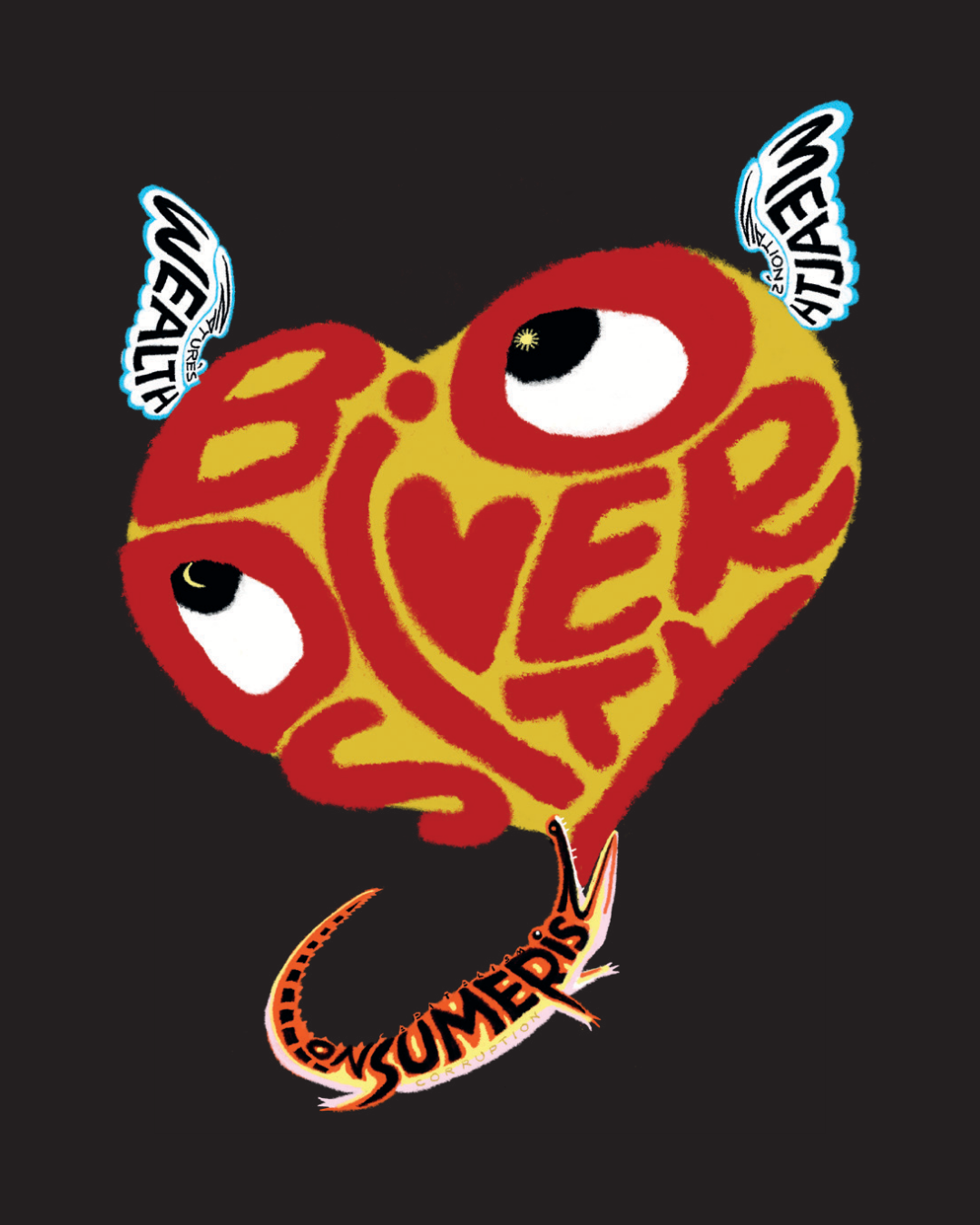
BI❤ DIVERSITY
Nature is disappearing in the name of development. We consume endlessly until even clean air, water, and food come at a cost. This design uses familiar symbols—fauna from Sarawak’s national emblem—to create a striking mascot: a bleeding, scarred heart fighting to survive. Its small wings represent nature, while a bite labelled “Consumerism” shows the damage caused by greed. It’s a call to action: to see, to care, and to change before it’s too late.
About the Artist: Shia Yih Yiing
Shia Yih Yiing is a Malaysian artist celebrated for her evocative use of allegory and nuanced storytelling.
A Malaysian Institute of Art graduate, she gained recognition for her symbolic series of rural family portraits inspired by Renaissance art, which earned her the Commonwealth Foundation Fellowship in Art & Craft. This led to a transformative research stint in Australia at the University of Western Sydney. Shia’s works explore themes of motherhood, identity, and collective responsibility, seen in projects like Womb (2004), Motherhood Games (2008), and The Weaver (2014). In 2022, her installation Planting Dream: In Search of a Good Gardener turned nature into a metaphor for ecological identity and shared stewardship.
Instagram: @shiayihyiing_art
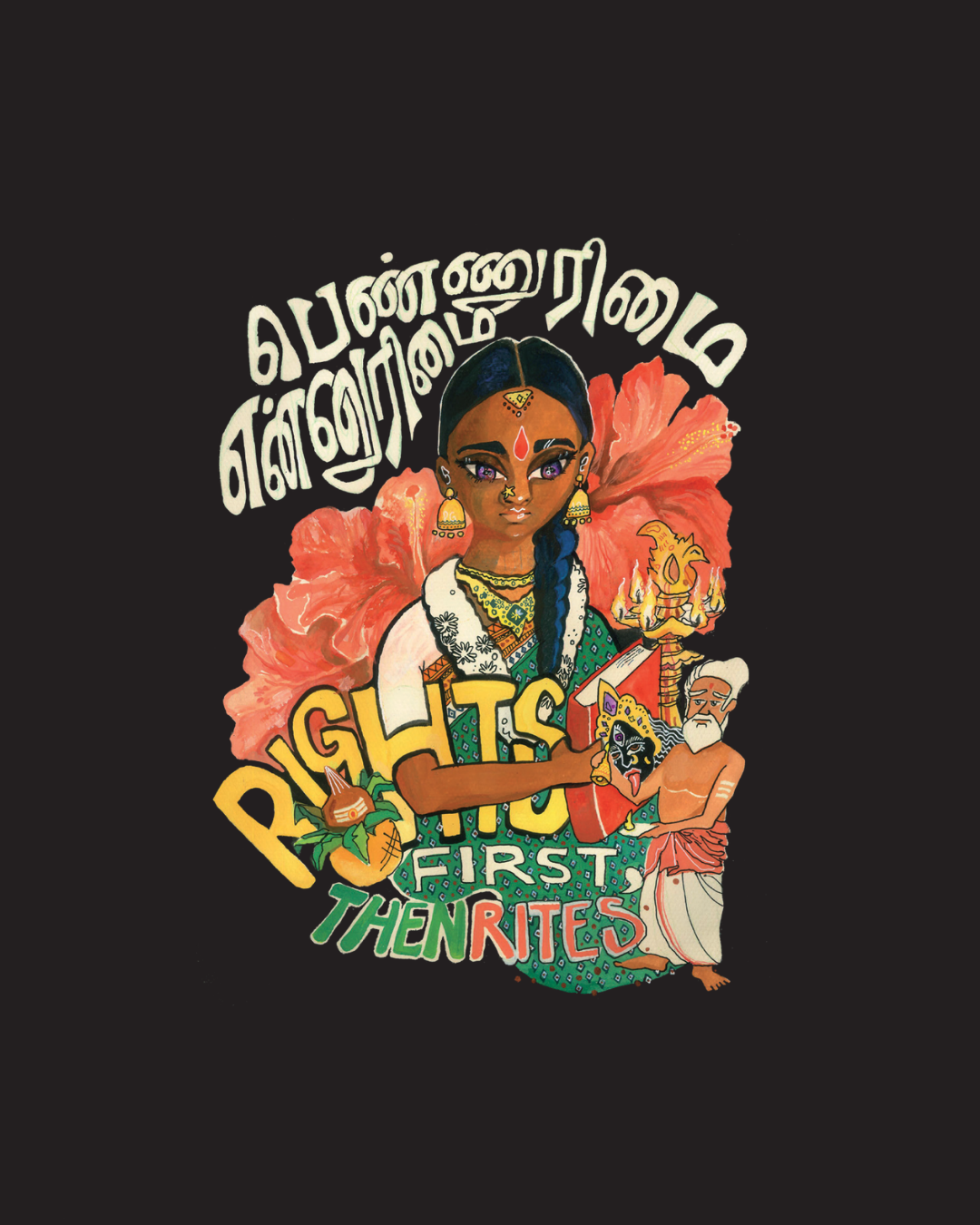
Rights First, Then Rites
Sadangu, or the half-saree ceremony, marks a girl’s transition into womanhood—but what if it also empowered her beyond tradition? This artwork reimagines the ritual of adorning her first saree, with flowers and sandalwood, to a time where teenage girls receive sex education, reproductive rights, and awareness of women’s movement.
The artwork blends culture and activism, centering a young woman holding both tradition and resistance. By prioritising rights alongside rites, we challenge the idea that womanhood is merely a celebration—it must also be a foundation for knowledge, autonomy, and choice.
About the Artist: Rupa Subramaniam
Rupa Subramaniam is a multidisciplinary visual artist and curator whose work navigates identity, feminism, and culture through an intersectional lens. Merging traditional art forms with contemporary techniques, she crafts textured, layered pieces that engage with global narratives while reflecting localised politics.
A key figure in Malaysia’s contemporary art scene, she is committed to deepening artistic expression and cultural discourse. Her current venture, www.skinandsoul.art, explores accessible web exhibitions, aiming to foster creative and social consciousness among urban audiences.
Instagram: @warna.rupa
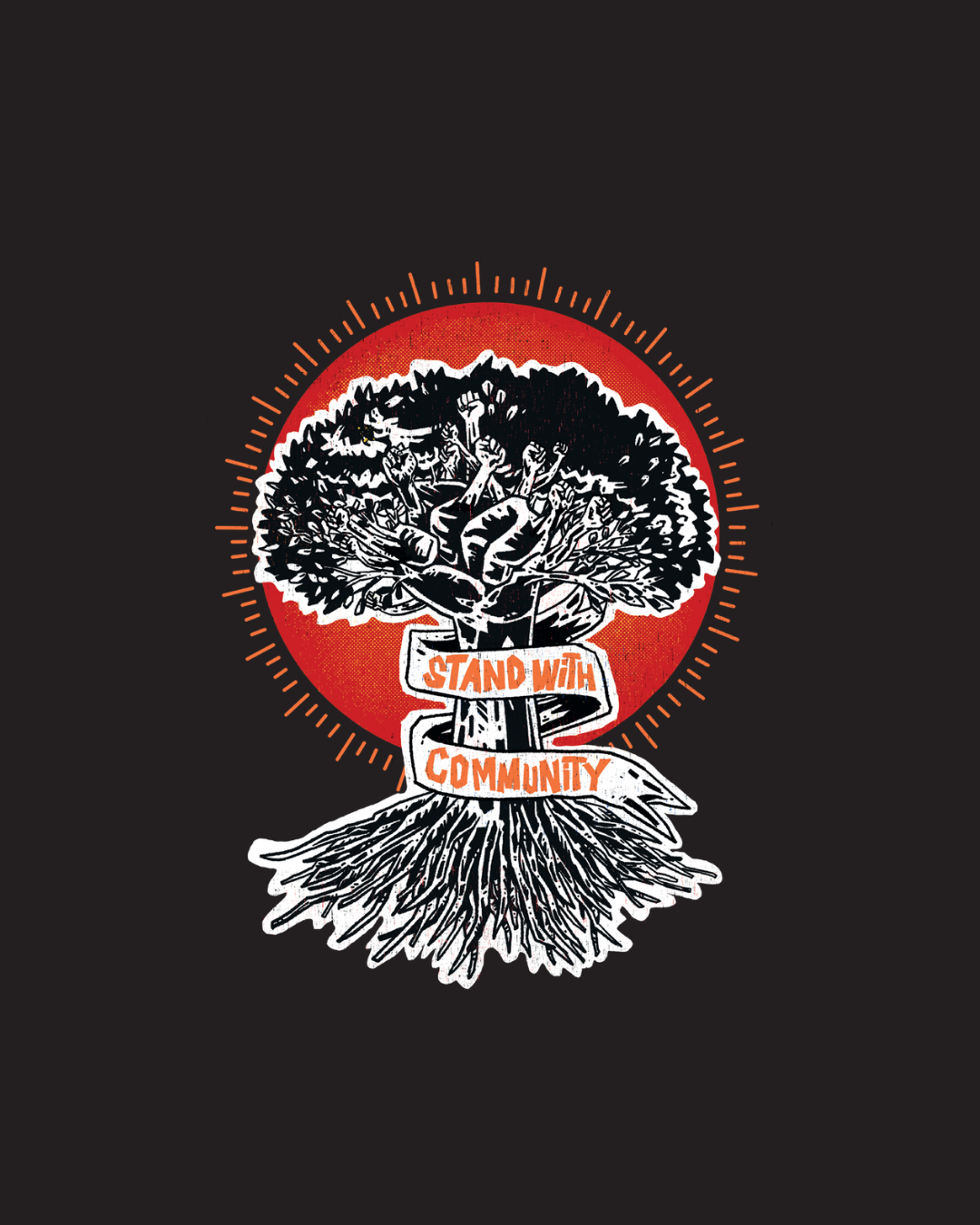
Stand with Community
This artwork symbolises the deep connection between individuals and their community, represented by the merging of a tree and a right hand. The tree, known for resilience and growth, intertwines with the hand to convey strength, unity, and support. The right hand, linked to action and giving, extends as branches, signifying outreach. Strong roots emphasise a thriving community’s foundation—built on shared values and trust. The branches represent diversity and interconnectedness. This artwork highlights the importance of standing together, growing together, and supporting one another, reminding us that, like a tree, a community flourishes with care and unity.
About the Artist: Pangrok Sulap
Pangrok Sulap is a Sabah-based art collective founded in 2010, known for its socially engaged printmaking, murals, and community-driven projects. Comprising artists, musicians, writers, and activists, the collective empowers rural communities through art, education, and cultural advocacy. Their works blend traditional woodcut techniques with contemporary social issues, fostering dialogue on indigenous rights, environmental conservation, and local heritage. Since 2013, Pangrok Sulap has exhibited globally, with pieces held in collections at the Mori Art Museum (Japan), Singapore Art Museum, and Queensland Art Gallery (Australia). The collective continues to collaborate on grassroots initiatives that promote social change through the arts.
Instagram: @pangrok_sulap
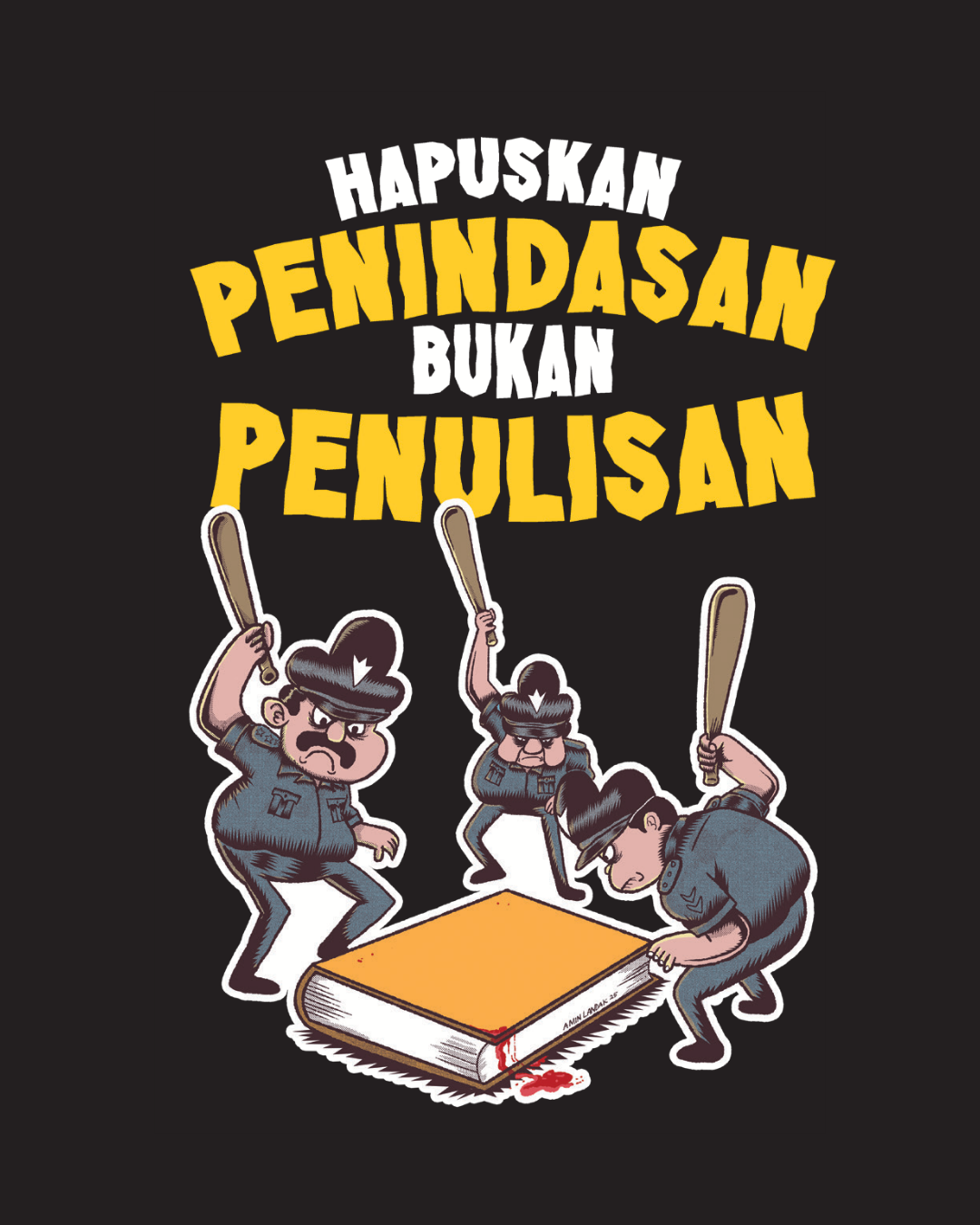
Abolish Oppression, Not Writing
This work was born out of concern over the restriction of thought and the fear of ideas. It is my response to the banning of six books and the monitoring of a book event by authorities earlier this year. I believe that freedom of speech and expression is a fundamental right that must be defended. Writing is not a threat—rather, it is the suppression and intimidation of critical thinking that must be stopped. Opening a book is not a crime, but closing minds is a form of oppression that stifles progress. Knowledge should be celebrated, not restricted.
Abolish Oppression, Not Writing!
About the Artist: Amin Landak
Amin Landak is a Malaysian cartoonist and illustrator known for his satirical and politically charged works. Originally from Kelantan, he studied Illustration at the Malaysian Institute of Art and now works as a graphic designer at Malaysiakini. His widely recognised comic series Yak Bok Te! (2013– present) critiques social and political issues through sharp humour and visual storytelling. Amin’s activism extends beyond comics—he frequently collaborates with NGOs on awareness campaigns and has published multiple comics and children’s books. In 2021, his illustrations for the animated film Chilli Powder & Thinner sparked national debate, reinforcing his reputation as an artist unafraid to challenge authority.
Instagram: @aminlandak
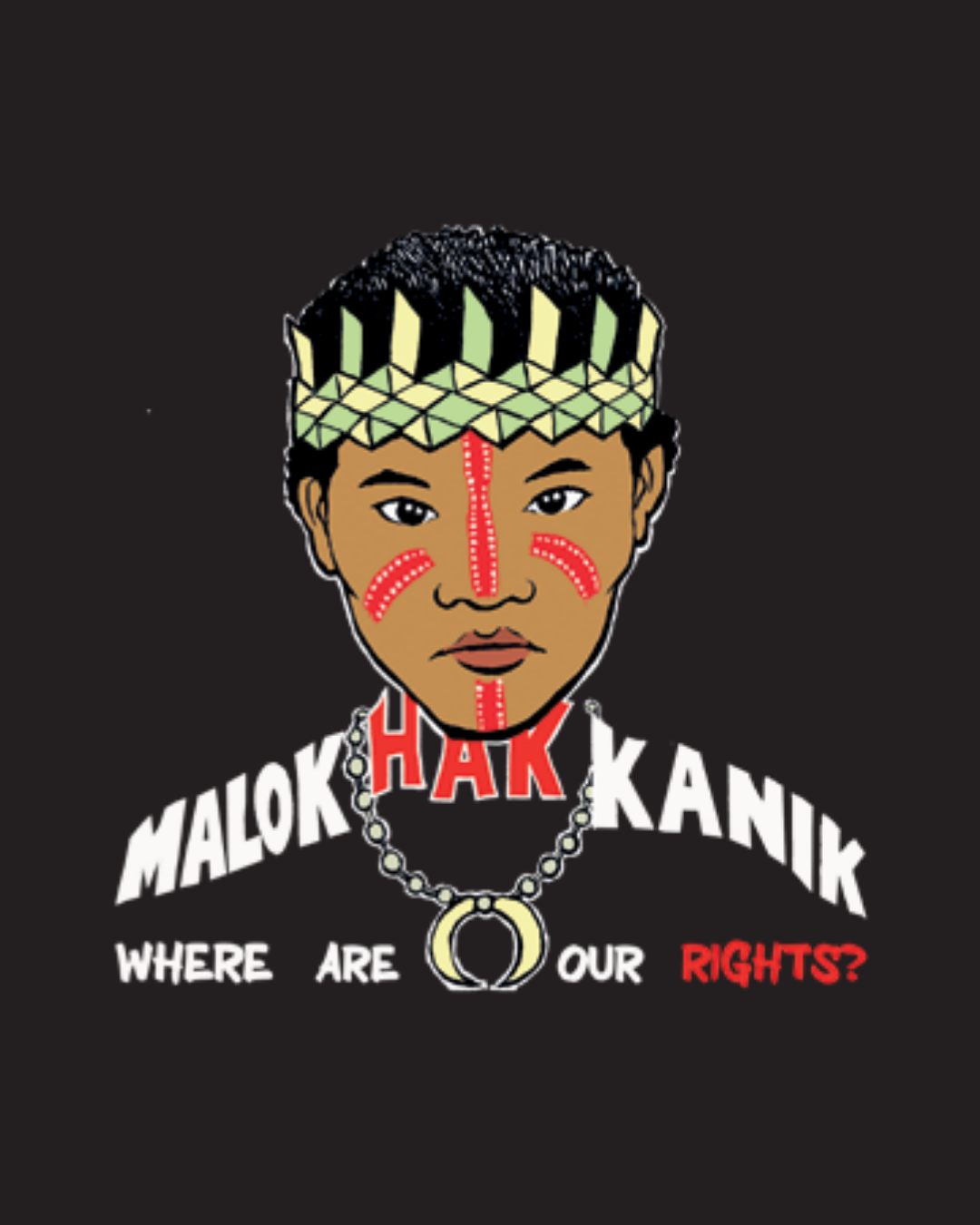
Malok Ha Kanik (Where Are Our Rights?)
In Malaysia, Indigenous communities—particularly the Orang Asli in Peninsular Malaysia—experience significant marginalisation, leading to ongoing violations of their rights. Numerous indigenous lands have been seized, forcing individuals to leave their ancestral homes due to inadequate legal protection. Many of these lands lack full protection, and often, territories where Indigenous peoples have lived for millennia remain unrecognised by the land authorities.
The plight of the Temiar Indigenous community in Gua Musang, Kelantan, has particularly inspired the creation of this t-shirt. They are currently in the process of having their land rights recognised through legal proceedings. The design is aimed at raising the question of how many times this crisis will occur.
Will it end someday?
About the Artist: Shahar “Shaq” Koyok
Shahar “Shaq” Koyok is a contemporary artist and activist from the indigenous Temuan Orang Asli tribe in Selangor. His art merges activism with portraiture, reflecting identity, land rights, and environmental justice themes. After earning his Fine Art degree from Universiti Teknologi MARA, he exhibited widely both in Malaysia and internationally.
His bold, expressive brushwork highlights the struggles of Malaysia’s indigenous communities, drawing from childhood memories of land encroachment and displacement. Beyond painting, Shaq engages in installations, murals, and performance art. He is also involved in community art projects with Orang Asli villages, using creative expression to empower and advocate for indigenous rights.
Instagram: @shaqkoyok_art